
Rubber Flooring Rolls in South Africa: 8 Types, Best Uses & Buying Guide
Rubber flooring rolls have become one of the most popular “do-it-once, enjoy-for-years” flooring options for South African homes and businesses. They’re tough, comfortable underfoot, and designed to handle high foot traffic, equipment, and daily wear—without the cracking and chipping that can happen on bare concrete or brittle surfaces. BrandMat’s own overview highlights how rubber flooring rolls are valued locally for versatility, durability and eco benefits.
In this guide, you’ll learn what rubber flooring rolls are, the 8 most common roll types used in South Africa, where each one works best, and how to choose the right thickness and pattern for your space. If you’re upgrading a gym, school, retail store, workshop, warehouse, play area, or a home utility room, this article will help you buy with confidence.
What Are Rubber Flooring Rolls?
Rubber flooring rolls are large sheets of rubber supplied in roll form, designed to be laid over a subfloor to create a durable, slip-resistant surface. They typically come in different thicknesses, textures (patterns), and colours to match the environment and performance needs. Many roll products are made using recycled rubber, which supports waste reduction and long service life.
Why rolls instead of tiles?
- Fewer seams: Rolls create a smoother, more continuous finish compared to many small tiles.
- Fast coverage: Ideal when you’re covering medium to large spaces.
- Easy maintenance: Less edge lifting and fewer gaps where dust can settle.
- Cost-effective: Often a practical choice for large areas versus buying many individual pieces.
8 Popular Types of Rubber Flooring Rolls
Your space should decide your roll type. Below are the most common rubber flooring roll textures and formats used in South Africa—each with a purpose. (These match the typical “8 types” structure buyers look for when comparing rubber roll options.)
1) Coin pattern rubber flooring
Coin pattern rolls have raised “coin” circles that improve grip and help hide scuffs in busy areas. It’s a favourite in high-traffic commercial spaces where safety and easy cleaning matter.
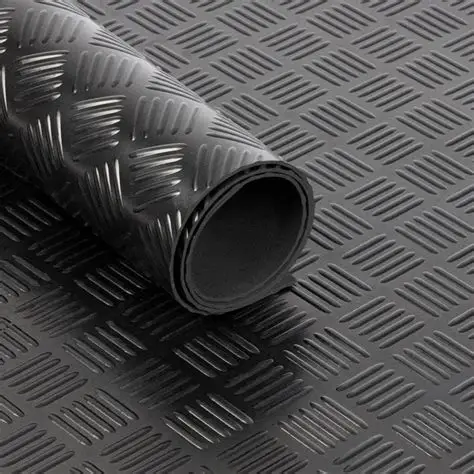
2) Diamond plate rubber flooring
Diamond plate (checker-style) rubber rolls are built for traction and hard use. This pattern is commonly chosen for industrial and workshop environments where slips, dust, and equipment movement are part of daily operations.
3) Smooth rubber flooring rolls
Smooth rolls give a clean, modern look and are easy to sweep and mop. They’re often used in gyms, fitness rooms, playrooms and general indoor areas where you want a tidy, simple finish.
4) Ribbed rubber flooring
Ribbed rubber rolls offer extra grip and channel minor spills. They’re useful in areas prone to moisture such as kitchens, wash bays, or utility passages where traction is important.
5) Interlocking-edge rubber rolls
Some rubber roll systems feature interlocking edges for easier alignment and a more “locked-in” fit. These are popular for garages, workshops and home gym areas where stability is key and you want an easier install approach.
6) Speckled rubber flooring
Speckled rolls include coloured flecks that add visual interest while keeping the practical benefits of rubber. Speckled finishes also help disguise dust and small marks between cleans—handy for busy commercial spaces.
7) Hammered / textured rubber flooring
Hammered textures offer stronger slip resistance and a more rugged surface. These are often selected for outdoor-adjacent areas such as patios, pool surrounds, or transition zones where water might be tracked in.
8) Recycled rubber flooring rolls
Recycled rubber rolls are chosen for sustainability and durability. If your priority is long life, good traction, and making an eco-aware choice, recycled-content rubber flooring is a strong option.
8 Best Uses for Rubber Flooring Rolls
Because rubber flooring absorbs impact and improves traction, it’s used across many industries. Here are the most common applications in South Africa.
1) Gyms and fitness centres
Rubber flooring rolls help reduce impact and noise, protect the subfloor from equipment, and create a safer surface for training. For gym-style mat options, you can also browse our rubber mats.
2) Play areas and recreational spaces
Rubber’s resilience makes it a practical choice for play zones where comfort and basic impact reduction matter—especially in indoor recreation areas.
3) Commercial and industrial spaces
In workshops, warehouses, and production areas, rubber flooring can handle heavy foot traffic and improves grip in working walkways. If you need modular solutions, view interlock rubber mats.
4) Schools and educational institutions
Schools need flooring that’s durable, easy to clean, and safe for busy movement. Rubber rolls are commonly used in corridors, activity rooms and multi-purpose spaces.
5) Healthcare facilities
Traction and hygiene matter in healthcare spaces. Rubber flooring can reduce slip risk and provides a surface that’s easier to maintain than many porous options.
6) Residential spaces
Rubber rolls work well in home gyms, garages, basements, utility rooms, and even certain kitchen or laundry areas where durability and cleaning convenience matter.
7) Retail stores
Rubber flooring can help reduce footfall noise and maintain a professional look while still being practical for daily cleaning in busy retail areas.
8) Sports facilities
From training areas to indoor sports zones, rubber rolls provide consistent footing and impact absorption. The right texture depends on the sport and expected traffic.
Environmental Benefits of Rubber Flooring
Many rubber flooring roll products are made using recycled rubber. This helps reduce landfill waste and lowers the demand for new raw materials. Rubber rolls also tend to last a long time, which means fewer replacements and less waste over time.
Why durability is a sustainability advantage
A floor that lasts longer is often the greener option. If a cheaper floor needs replacement every 1–2 years, it creates more transport, more disposal, and more repeat buying. Rubber rolls are commonly chosen because they’re made to handle years of use in tough environments.
How to Choose the Right Rubber Flooring Roll
1) Pick the right thickness for your use
- Light-duty: Home utility rooms, light foot traffic, basic protection.
- Medium-duty: Home gyms, small studios, retail floors.
- Heavy-duty: Commercial gyms, workshops, warehouses, areas with equipment and frequent impact.
2) Choose a texture that matches your environment
- Wet or spill-prone areas: Ribbed or textured patterns for grip.
- High traffic: Coin or diamond plate patterns hide marks and improve traction.
- Clean, modern look: Smooth rolls (best indoors, where conditions are controlled).
3) Consider installation method
Rubber rolls can be loose-laid in smaller spaces (especially if heavy), or installed more permanently using appropriate adhesives or edge finishing depending on the area. If you want the simplest DIY install and easy replacement, interlocking solutions may be the better option.
Cleaning and Maintenance Tips
Daily / weekly routine
- Sweep or vacuum to remove grit (grit acts like sandpaper over time).
- Damp mop with mild soap and water (avoid harsh chemicals unless approved for your product).
- Spot-clean spills early to prevent build-up.
Deep cleaning
For deeper cleaning, scrub gently with a soft brush and mild detergent, then rinse with clean water and allow to dry fully. In gyms and commercial spaces, a consistent cleaning routine keeps the surface looking professional and helps maintain traction.
FAQs About Rubber Flooring Rolls in South Africa
Is rubber flooring good for gyms?
Yes—rubber flooring is one of the most popular choices for gyms because it supports traction, comfort, and impact reduction. The best thickness depends on whether you’re doing general training or heavy weights.
Can rubber flooring rolls be used in garages and workshops?
Absolutely. Many customers choose textured rubber flooring in workshops and garages for better grip and floor protection, especially where dust and tools are common.
Do rubber flooring rolls smell?
Some rubber products may have a “new rubber” smell initially. This usually fades with ventilation and normal cleaning, especially in the first few days.
What’s better: rubber rolls or interlocking rubber tiles?
Rolls are great for smoother, continuous coverage with fewer seams. Interlocking tiles are ideal if you want easy DIY expansion and the ability to replace single sections. Compare options in our interlock rubber mats range.
Ready to Buy Rubber Flooring? Get the Right Fit
The best rubber flooring roll is the one matched to your space: the right thickness, the right texture, and the right installation approach. If you want help choosing the best option for your home or business, contact our team for advice and pricing.
Browse: Rubber Mats | Interlock Rubber Mats | Get a Free Quote